How Do Luxury Hotels Formulate Custom Toiletries for Middle East Water & Heat?
Luxury hotels formulate for the Middle East by fixing three things. First, plant-based chelating agents keep shampoo lathering in hard or mineral-heavy water. Second, emulsions are stabilized to survive 50°C (122°F) container heat without separating. Third, lightweight non-greasy moisturizers counter constant air conditioning. Gulf buyers also expect woody or floral fragrance profiles, vegan and ethanol-free formulas, and GSO 1943 / SFDA compliance.
Adapting to Gulf Environments in Middle East Luxury Hotel Toiletries Sourcing
Hospitality development across the Gulf Cooperation Council (GCC)—especially in Riyadh, Jeddah, Dubai, and Abu Dhabi—is moving at a rapid pace. However, procurement teams often discover that standard European or North American hotel amenities do not perform well once they arrive in the region.
Successful Middle East luxury hotel toiletries sourcing through specialized Hospitality & Spa Amenities Solutions requires accounting for three everyday environmental factors that affect both product quality and guest satisfaction:
- Extreme Contrasts Between Outdoor Heat and Indoor Cooling: Guests move constantly between 45°C+ outdoor desert heat and heavily air-conditioned hotel interiors, malls, and offices. This rapid temperature shift strips moisture from the skin and scalp, leaving hair brittle and skin tight.
- High-Temperature Freight and Port Storage: Shipping containers arriving at Jebel Ali (UAE), Dammam, or Jeddah (Saudi Arabia) regularly sit in port yards where internal container temperatures exceed 50°C (122°F). Standard cosmetic lotions that are not heat-stabilized can thin out, separate into water and oil layers, or leak through pump caps before they ever reach the hotel warehouse.
- Water Chemistry That Changes City by City: The GCC is not one water market. Dubai, Doha and Kuwait City run mainly on desalinated seawater at roughly 50–180 mg/L TDS — soft, low-mineral water with 0.2–1.0 mg/L residual chlorine. Riyadh, Sharjah and Manama draw heavily on groundwater, where total hardness reaches 300–600 mg/L as calcium carbonate. A surfactant system tuned for Riyadh over-chelates in Dubai, so the water profile has to be confirmed before the formula is fixed.
| Gulf City | Primary Source | TDS (mg/L) | Hardness Profile |
|---|---|---|---|
| Dubai (DEWA) | Desalinated seawater | 80–180 | Soft to moderate, around 71 mg/L as CaCO3 |
| Abu Dhabi | Desalinated, blended | 100–250 | Moderate, varies by district |
| Doha | Desalinated seawater | 60–150 | Low mineral content |
| Kuwait City | Desalinated seawater | 50–130 | Very low mineral content |
| Jeddah | Desalinated, blended | 150–350 | Highly variable, elevated sodium |
| Sharjah / Northern Emirates | Groundwater blend | 200–400+ | Hard, scale risk |
| Riyadh | Groundwater dominant | 300–600+ | Very hard, high sodium |
| Manama | Groundwater + desalinated | 200–500 | Hard, variable |
A Practical Hard Water Hotel Shampoo Formulation Guide for GCC Properties
One of the most common guest complaints in Gulf hotels is that the shampoo feels flat, refuses to lather, and leaves hair feeling coated or tangled after rinsing. This happens because calcium and magnesium ions in hard or groundwater-blended supplies bind to standard cleansing ingredients (surfactants) before they reach the hair, deactivating their ability to create foam.
Following a targeted hard water hotel shampoo formulation guide solves this problem at the laboratory level through three practical adjustments:
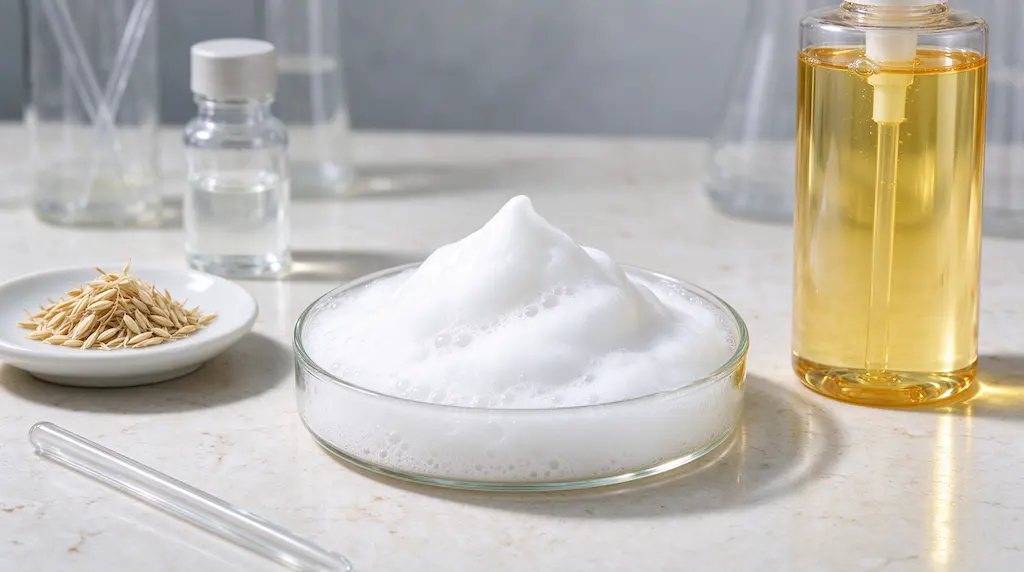
- Adding Plant-Based Chelating Agents: Our chemists include biodegradable chelating ingredients—such as Sodium Phytate (derived from rice bran) or Tetrasodium Glutamate Diacetate (GLDA). These ingredients chelate — they lock onto calcium, magnesium and trace metal ions, holding them in solution so the cleansing agents stay free to produce rich foam.
- Blending Hard-Water-Tolerant Surfactants: Instead of relying on a single basic cleanser, we pair gentle amino acid or glucoside cleansers with amphoteric co-surfactants (such as Cocamidopropyl Betaine) that thicken the foam without adding harshness. This combination builds a dense, creamy lather quickly, even in mineral-heavy water.
- Chlorine and Salt Damage Control for Pool & Beach Resorts: For properties in Dubai, Abu Dhabi, or the Red Sea coast where guests spend hours in chlorinated pools or high-salinity seawater, we add lightweight plant-derived conditioning polymers and provitamin B5 (Panthenol). These smooth the hair cuticle without weighing hair down.
Engineering High-Stability Desert Climate Hotel Skincare Amenities
Body lotions, hand creams, and hair conditioners face two opposing demands in the Middle East: they must provide deep hydration for air-conditioned skin, yet feel completely weightless when guests step outside into warm weather. At the same time, the bulk liquid must survive hot transit conditions.
Developing reliable desert climate hotel skincare amenities focuses on texture balance and thermal stability:
| Gulf Operational Challenge | Common Issue with Standard Formulas | LIZEE Care Laboratory Solution |
|---|---|---|
| Hard or Mineral-Heavy Water | Poor lather, soap scum on shower glass, dry tangled hair | Plant-derived chelating agents (Sodium Phytate) + betaine foam boosters for rich lather |
| 24/7 Indoor AC vs. 45°C+ Outdoor Heat | Heavy creams feel sticky outdoors; watery lotions fail to stop dry skin | Fast-absorbing plant squalane, aloe vera, and shea butter in a non-greasy base |
| 50°C+ Sea Freight & Port Containers | Emulsions separate into oil and water; viscosity drops; fragrance turns sour | High-shear vacuum homogenizing + 4-week 50°C oven stability testing before production |
| Cultural & Religious Preferences | Animal-derived ingredients, or ethanol-based room sprays | 100% Vegan plant-derived lipids + 0% ethanol water-based pillow and room mists |
- Fast-Absorbing, Non-Greasy Hydration: Rather than using heavy mineral oils or petrolatum that sit on top of the skin and trap sweat, we formulate with lightweight plant squalane, fractionated coconut oil, aloe vera juice, and refined shea butter. The lotion absorbs within seconds, leaving a soft, matte finish that keeps skin comfortable in dry air conditioning.
- Our Standard 50°C Transport Simulation: Before any custom lotion or conditioner goes into mass production, our Quality Control lab holds batch samples at 50°C (122°F) for four weeks, alongside freeze-thaw cycles. High-shear vacuum emulsification and heat-resistant natural waxes keep the cream smooth, thick and uniform through summer ocean freight and desert trucking. This is our own transport-simulation standard, run in addition to the accelerated stability data supplied for regulatory dossiers.
Balancing Heritage and Modernity in Middle East Hotel Fragrance Profile Design
Fragrance plays a central role in Arabian hospitality. Guests across the Gulf have a strong appreciation for fine perfumery, and light, fleeting fruit scents that work in budget hotels elsewhere often feel weak or unremarkable in Middle Eastern properties.
Our in-house fragrance and formulation team helps hotels approach Middle East hotel fragrance profile design by blending regional scent traditions with clean, contemporary perfumery:
| Hotel Property Type | Recommended Scent Profile | Key Fragrance Notes | Ideal Guest Experience & Format |
|---|---|---|---|
| Urban Business & Financial Hotels (Riyadh, Dubai DIFC, Doha) |
Modern Woody Amber | Cedarwood & Amber, Cardamom, White Musk | Clean, professional warmth for 300ml–500ml bathroom dispensers and lobby reed diffusers. |
| Luxury Heritage & Desert Resorts (AlUla, Abu Dhabi, Palace Stays) |
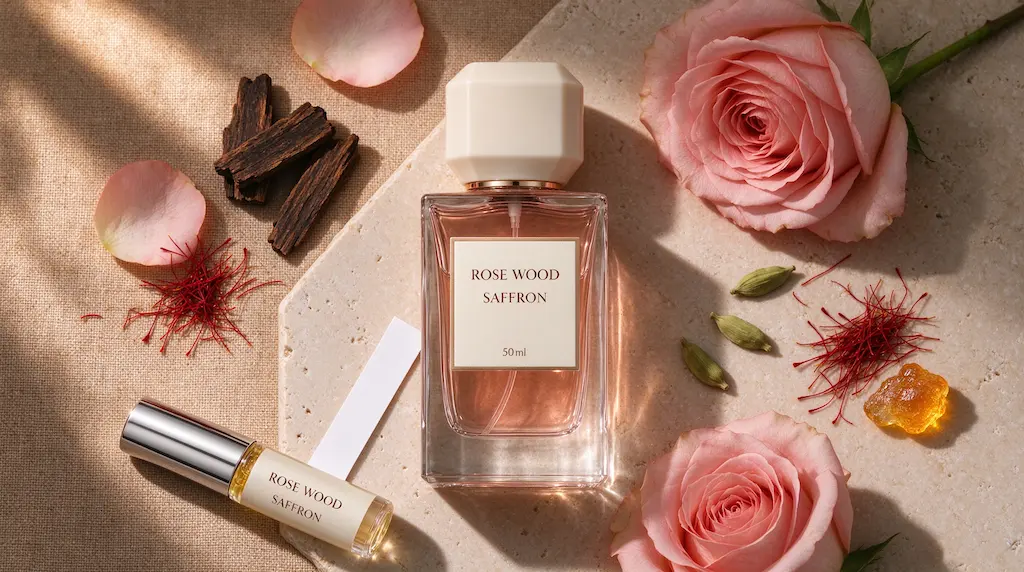
Contemporary Rose & Clean Oud | Damask Rose, Saffron, Refined Agarwood (Oud), Sandalwood | Rich, lingering skin scent for nourishing body lotions, VIP gift sets, and 0% ethanol pillow mists. |
| Coastal Beach & Family Resorts (Red Sea, Palm Jumeirah, Muscat) |
Oasis Citrus & Crisp Herbs | Bracing Silverbirch, Bergamot, Fig Leaf, Mint | Refreshing, cooling shower experience after sun, pool chlorine, and saltwater exposure. |
- Ethanol-Free Turn-Down Mists & Roll-Ons: To respect local cultural norms and simplify customs clearance, our water-based pillow sprays and 10ml pulse-point roll-on oils are formulated with 0% ethanol. They deliver pure, soothing fragrance on bed linens and skin without any ethanol smell or flammable cargo restrictions.
Navigating Saudi SFDA and UAE Hotel Cosmetics Compliance Smoothly
Importing custom toiletries into Saudi Arabia, the UAE, Qatar, Oman, Kuwait, or Bahrain requires strict adherence to the unified Gulf Technical Regulation for Safety of Cosmetic and Personal Care Products (GSO 1943). Shipments without valid registration or bilingual labeling risk being held at customs.
Working with an experienced manufacturer streamlines Saudi SFDA and UAE hotel cosmetics compliance across four essential areas:
- 100% Vegan & Halal-Friendly Ingredient Sourcing: GSO regulations strictly prohibit any porcine (pork) derivatives and unsafe animal fats. No animal-derived inputs are used. Glycerin, fatty acids, emulsifiers and amino acids are all plant-derived or mineral-based, and GSO 1943 prohibits porcine derivatives in any cosmetic sold in the GCC.
- Saudi SFDA (GHAD) & UAE (Montaji / ECAS) Documentation: Our regulatory team provides the complete technical dossier required by local importers to register products on Saudi Arabia's SFDA electronic portal and the UAE's Dubai Municipality (Montaji) or MOIAT (ECAS) systems. This includes GMPC / ISO 22716 certificates, Certificates of Free Sale (CFS), full INCI ingredient breakdowns, and batch Certificates of Analysis (COA).
- FASEH Certificates of Conformity (CoC): GHAD registration covers the product; it does not clear a shipment. Every consignment also needs a Certificate of Conformity requested through the SFDA FASEH platform, which is where first-time Gulf importers most often lose two to three weeks at port.
- Compliant Arabic Labelling with English: GSO 9, the GCC labelling standard, requires product function, storage instructions, country of origin and safety warnings in Arabic, with English permitted alongside, on the bottle or outer carton. Our design team assists with compliant bilingual label layouts before printing.
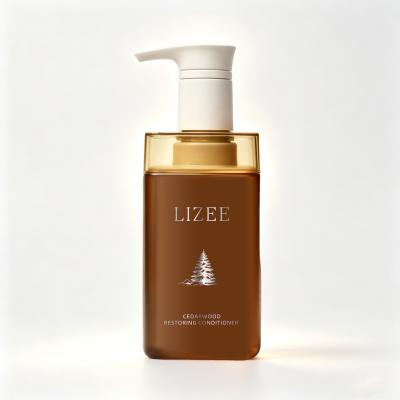
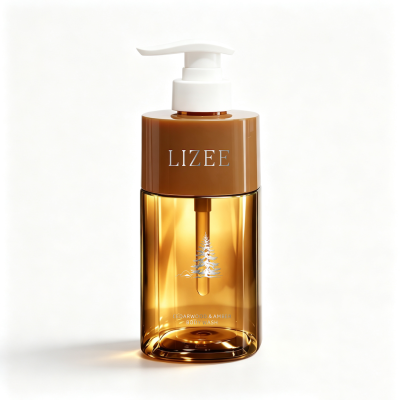
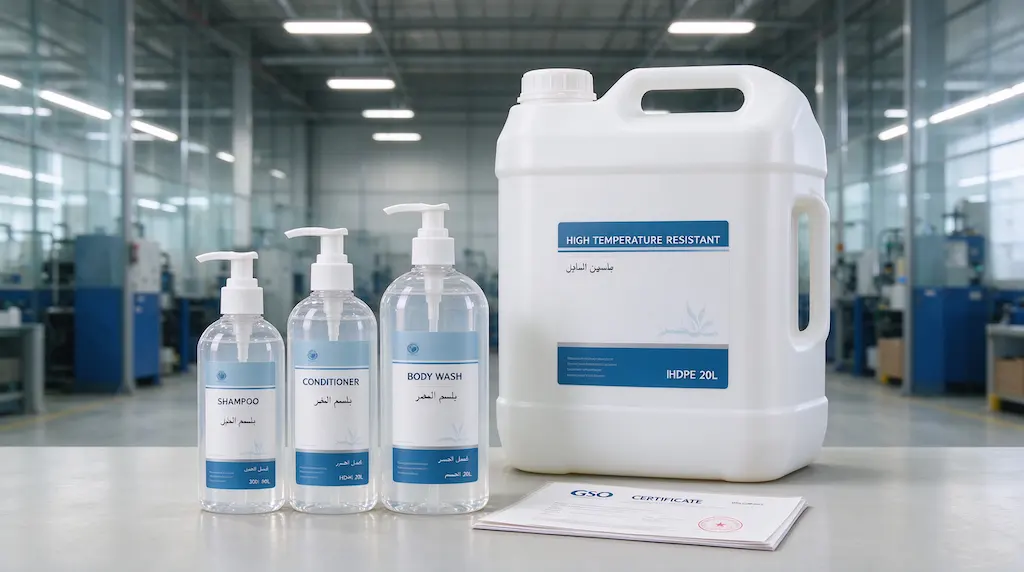
- Flexible 1,000-Unit MOQs & Heat-Resistant Bulk Drums: Whether you are supplying an independent boutique hotel in Riyadh or a large resort group in Dubai, we support starter orders of just 1,000 units per SKU for custom 300ml–500ml dispenser bottles, as well as heavy-duty 5L, 20L, and 200L HDPE bulk drums designed to withstand high-temperature container transit.
Our 4-Stage Custom Rollout Process for Middle East Hotels
Launching a climate-adapted amenity collection with LIZEE Care follows a structured, four-stage workflow managed by our fragrance chemists and export specialists:
Frequently Asked Questions
Why does hotel shampoo stop lathering in Dubai and Riyadh?
Calcium and magnesium ions in hard or groundwater-blended municipal water bind to the surfactants before they reach the hair, so the cleanser is deactivated early. Sodium Phytate or Tetrasodium Glutamate Diacetate holds those ions, and amino acid or glucoside cleansers paired with Cocamidopropyl Betaine rebuild a dense lather.
Can standard European hotel toiletries be shipped to the Gulf as they are?
Usually not. Three things break standard formulas: hard, mineral-heavy water stops surfactants from lathering, container temperatures above 50°C in Gulf port yards separate unstabilized emulsions, and GSO 1943 requires Arabic and English labelling that European retail packaging does not carry.
How do you stop body lotion separating in 50°C containers?
High-shear vacuum emulsification combined with heat-resistant natural waxes keeps the structure intact, and the formula is proved in a 50°C (122°F) incubator for four weeks alongside freeze-thaw cycles before the first production run. Each subsequent batch is released against the same specification with full COA. Viscosity drop, oil-water separation and fragrance souring are caught at the lab stage, not at the port.
Do custom hotel toiletries need SFDA registration in Saudi Arabia?
Yes. Products must meet GSO 1943 and be registered by the local importer on the Saudi SFDA (GHAD) portal. The dossier includes GMPC / ISO 22716 certificates, a Certificate of Free Sale, full INCI breakdowns and batch Certificates of Analysis. UAE importers register through Dubai Municipality (Montaji) or MOIAT (ECAS).
What is the minimum order for custom Middle East hotel amenities?
Custom 300ml–500ml dispenser bottles start at 1,000 units per SKU. Properties that refill in-house can take the same formulation in heat-resistant 5L, 20L or 200L HDPE drums, which are built to withstand high-temperature container transit.
Are ethanol-free room mists suitable for Gulf hotels?
Water-based pillow mists and 10ml pulse-point roll-ons are formulated at 0% ethanol, so they carry no ethanol smell and no flammable cargo restrictions. This also answers a common Halal-conscious hospitality concern about high ethanol content in room sprays.
Partner with LIZEE Care for Middle East Hospitality Amenities
Delivering five-star guest comfort in the Gulf requires more than a handsome bottle—it takes cosmetic chemistry engineered for local water, extreme heat, and regional fragrance tastes. Partner with our in-house fragrance and formulation team with flexible 1,000-unit minimums and bulk drum wholesale options.
Request Gulf Discovery Sample Box